
| Check your PMP Eligibility | Check your PMI-ACP Eligibility | Register for PMP Course |
Understanding how risk is viewed and managed is key to every successful project or organization. Risk attitude, risk appetite, risk tolerance, and risk threshold are four essential terms that guide how much risk an individual or organization is willing to take—and how they respond when things go beyond plan.
All important management decisions involve risk taking, and we need to be able to answer questions starting with “How much risk…?” These questions include:
- How much risk do we face?
- How much risk can we take?
- How much risk should we take?
- How much risk do we want to take?
- How much risk will we take?
- How much risk are we taking?
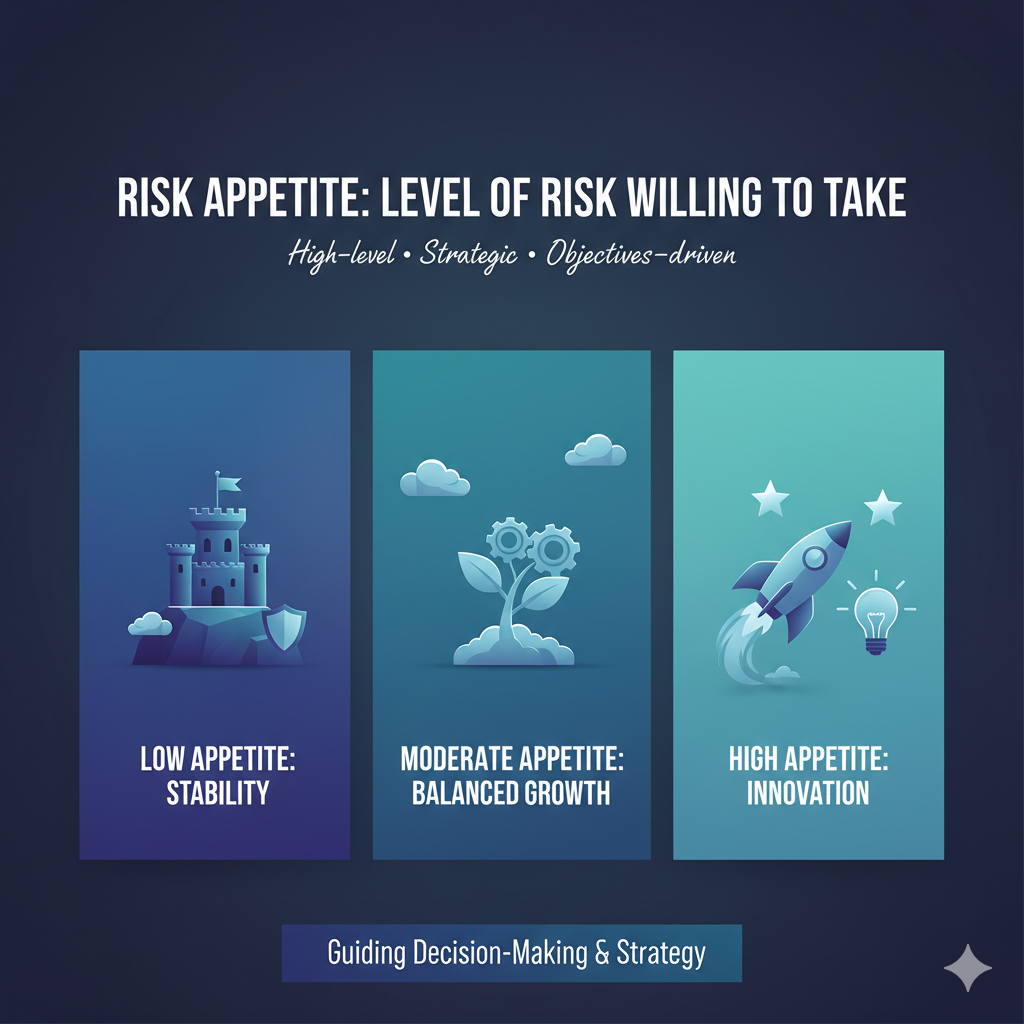
Risk Appetite
Risk appetite is the amount and type of risk an organization or individual is willing to take in pursuit of its goals. It represents the general level of uncertainty you can live with for expected rewards.
ISO Guide 73:2009 (International Organization for Standardization [ISO], 2009a) defines;
Amount and type of risk that an organization is prepared to seek, accept or tolerate
Risk appetite defines the tone for decision-making. It tells your project team or management how bold or conservative to be in accepting uncertainty for growth or success.
Typically, a risk appetite statement is approved by the board of directors and documents the organization’s risk attitude and its willingness to accept risk in specific scenarios, with a governance model in place for risk oversight (e.g., monitor if unacceptable risks are being pursued)
Example:
A startup may have a high risk appetite for innovation but a low risk appetite for safety or regulatory issues.
Risk Tolerance
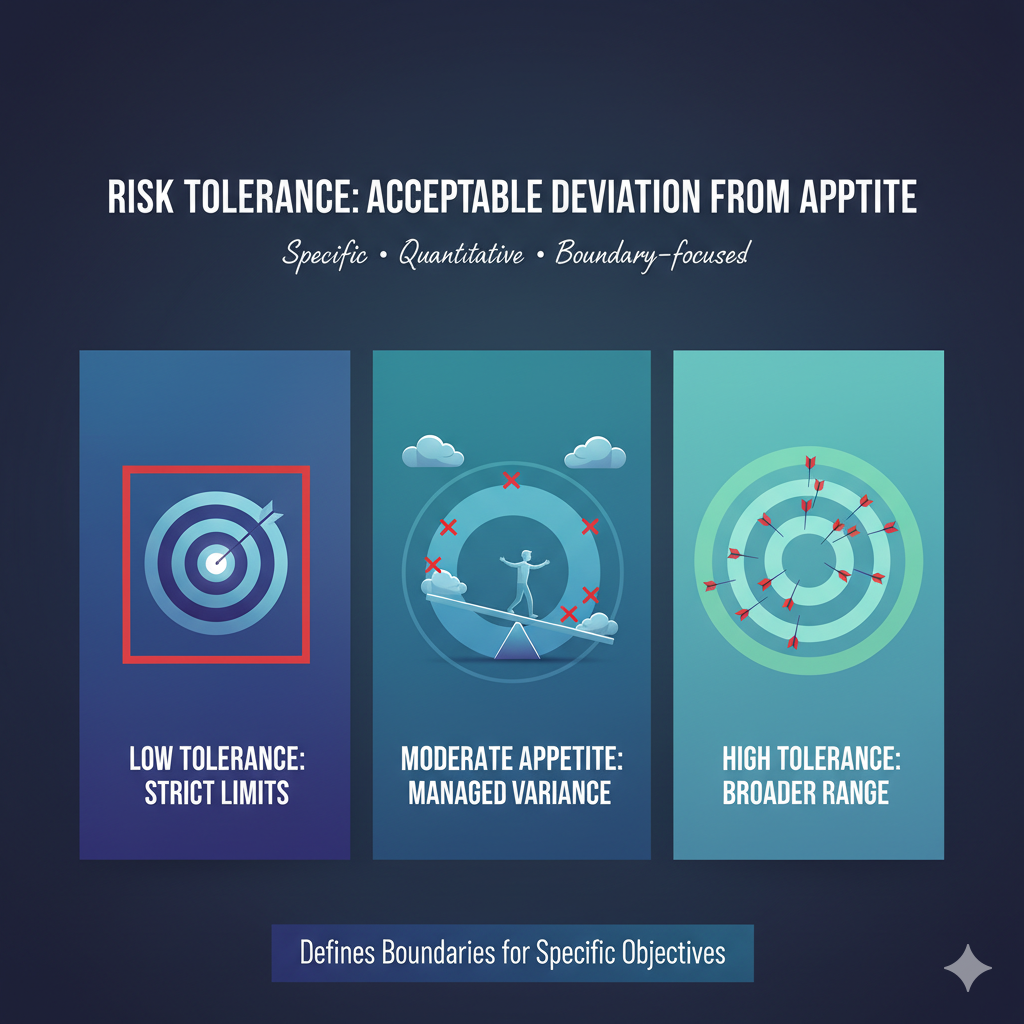
According to the PMBOK® Guide (6th Edition), risk tolerance is the identified range of acceptable outcomes.
It shows how much deviation from your target values (like cost, schedule, or quality) you are ready to accept.
Risk tolerance makes risk measurable. It defines clear numeric boundaries and helps monitor whether a project is staying within acceptable limits.

Example:
If your project budget is USD 500,000 and your company allows a ±5% variation, that ±5% represents your risk tolerance.
Conceptually, risk tolerance sets the boundaries of risk taking that the organization will not go beyond in pursuit of its long-term objectives.
Risk Threshold
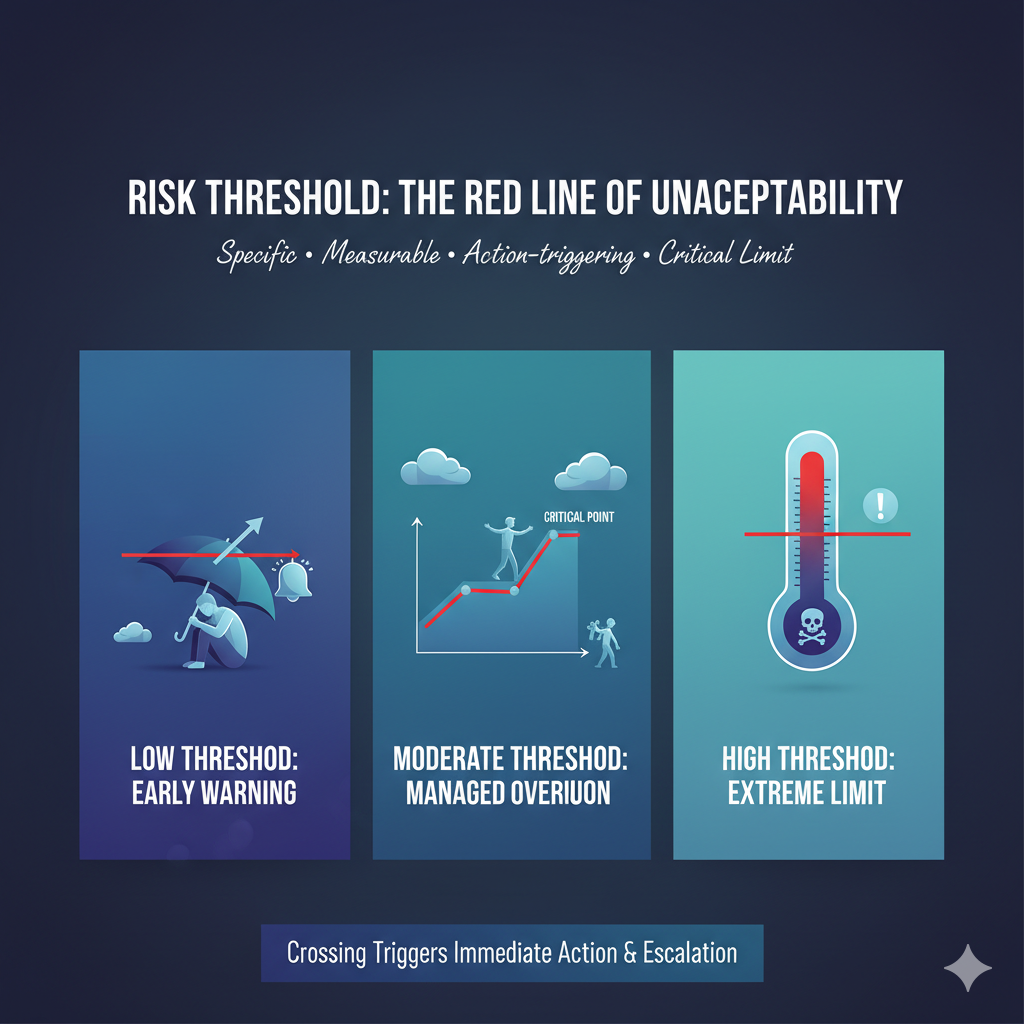
As defined by the PMBOK® Guide (6th Edition), risk threshold is the degree of exposure at which risks are addressed, and below which they are accepted.
It’s the trigger point — when a risk crosses the line from acceptable to unacceptable.
The risk threshold helps teams know when to take action. It supports proactive decision-making and prevents major project losses.
Example:
If your organization says that for a USD 200,000 project, you cannot add more than USD 5,000 extra, that USD 5,000 is your threshold. Once the exposure exceeds it, you must act immediately.
Risk Attitude
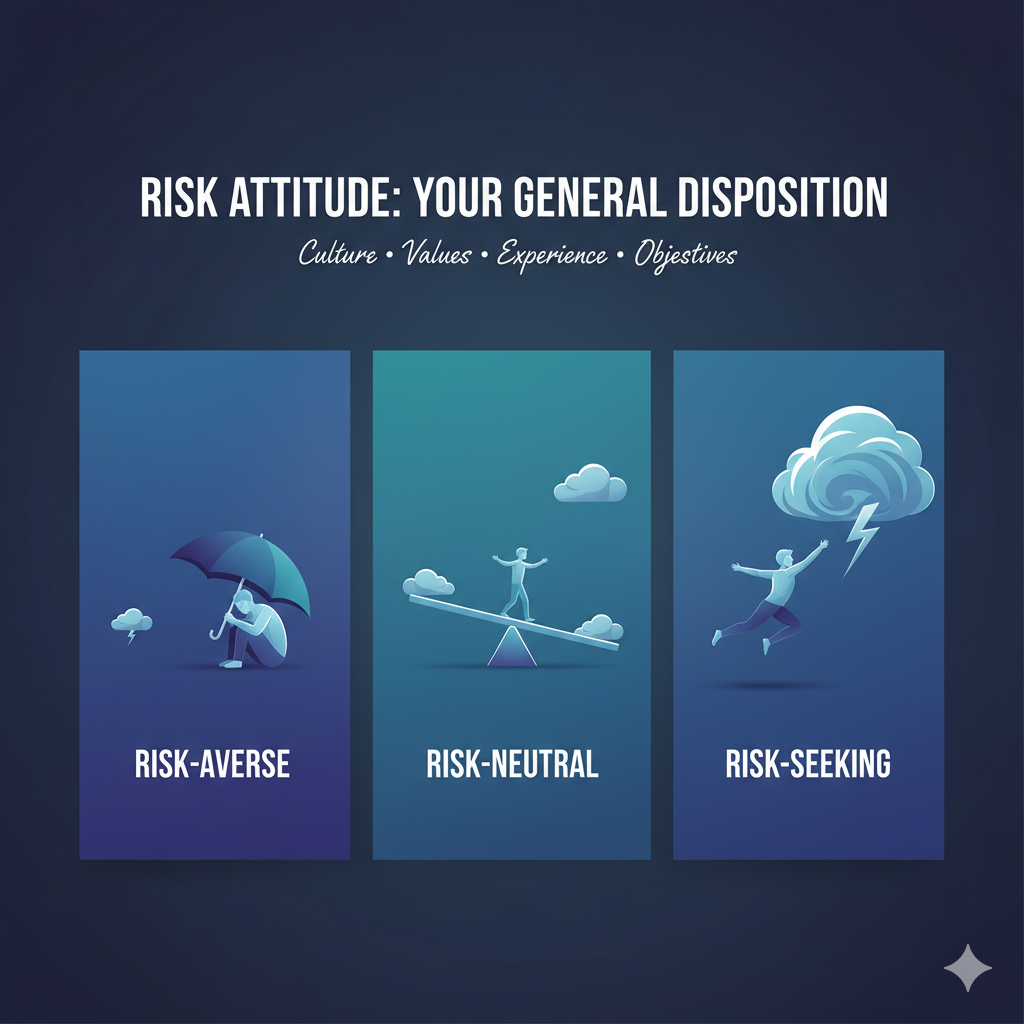
Risk attitude is how an individual or organization perceives and approaches risk. It’s the mindset that drives risk-related decisions — shaped by culture, experience, and leadership style.
Your risk attitude influences how you set your appetite, tolerance, and thresholds.
A risk-averse attitude leads to low tolerance and tight thresholds.
A risk-seeking attitude encourages flexibility and innovation.
Example:
If your team prefers stable and predictable projects, that’s a cautious risk attitude. If they enjoy challenges with high potential returns, they show a bold or positive risk attitude.
🟢 1. Risk Averse
A risk-averse person or organization avoids risk as much as possible.
- They prefer safe and predictable results.
- They may accept lower rewards in exchange for lower uncertainty.
- They usually spend more time and money to reduce risk exposure.
Example:
A company chooses a supplier with a higher price but proven reliability instead of a cheaper, new supplier.
🟡 2. Risk Neutral
A risk-neutral person or organization looks at facts and probabilities, not emotions.
- They make decisions based on expected outcomes, not fear or excitement.
- They are okay with taking risks if the expected gain is worth it.
Example:
A project manager chooses between two options only by comparing expected profit, not by how risky one option feels.
🔴 3. Risk Taker/Seeking
A risk-taker is comfortable with uncertainty and sometimes even enjoys it.
- They are willing to take high risks for the chance of high rewards.
- They often act quickly and may not worry much about what could go wrong.
Example:
An investor puts money into a new startup knowing it could fail but could also bring huge returns.
How These Concepts Work Together
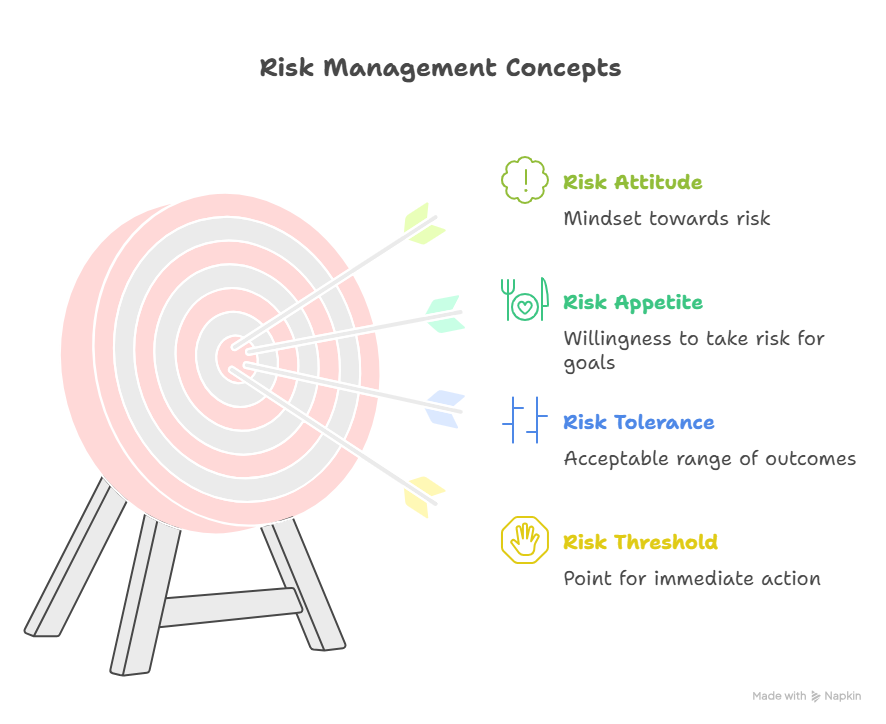
These four concepts connect logically:
- Risk Attitude – The mindset toward taking risks.
- Risk Appetite – The overall amount of risk you are willing to take.
- Risk Tolerance – The acceptable range of variation in key objectives.
- Risk Threshold – The exact point at which action must be taken.
Together, they build a complete framework for effective risk management and ensure all stakeholders share a common understanding of acceptable risk levels.
Why This Matters for You
Understanding and applying these terms helps project managers, leaders, and business owners to:
- Make clear and confident risk decisions.
- Strengthen risk management plans with defined limits.
- Communicate better with teams and stakeholders.
- Align project risks with strategic objectives.
When these boundaries are clear, risk becomes a strategic enabler, not just a threat.
Key Takeaways
- Define your risk attitude early—it shapes your organization’s mindset.
- Set your risk appetite—how much uncertainty you are ready to accept.
- Establish risk tolerance—the measurable limits you can handle.
- Identify risk thresholds—the exact points that demand action.
By balancing all four, you can manage uncertainty wisely and achieve success with confidence.
Further Readings
- Project Risk Management
- How much risk is too much risk? Understanding risk appetite
- Risk Definitions
- Exploring Risk Appetite and Risk Tolerance

- 5 Risk Tolerance Considerations for Project Managers
- Study.com
- Risk Appetite, Risk Tolerance, and Risk Threshold
- Risk Appetite and Risk Tolerance
🔍 Top PMP Keywords for 2025
These popular search terms are commonly used by professionals preparing for the PMP exam. Use them to guide your study or content strategy:
- ✅ Certification as a Project Management Professional
- ✅ PMP Certification Project Management Professional
- ✅ Project Management Professional Exam
- ✅ PMP Exam Prep Guide
- ✅ PMP Study Plan
- ✅ PMP Certification Cost
- ✅ PMP Test Tips
- ✅ Project Management Course
Tip: These keywords can help improve your understanding of key exam topics and align your prep with current industry search trends.
|
📚 Flash Cards/ PMP Practice Exam (Identify and fill your knowledge gaps) |
🧮 Formula Sheet |
🔄 Project Management Flows Understand the Big Picture |
📝 PMIs PMP Application |
|
🎲 Process Groups Game (First step into your ITTO Journey) |
⚡ Agile Project Management Flows | ||
|
🏅 Earn Your PDUs (Renew your Certification) |
📌 PMP Exam Content Outline Game (Begin your Journey here) |
📚 And More |
|