
| Check your PMP Eligibility | Check your PMI-ACP Eligibility | Register for PMP Course |
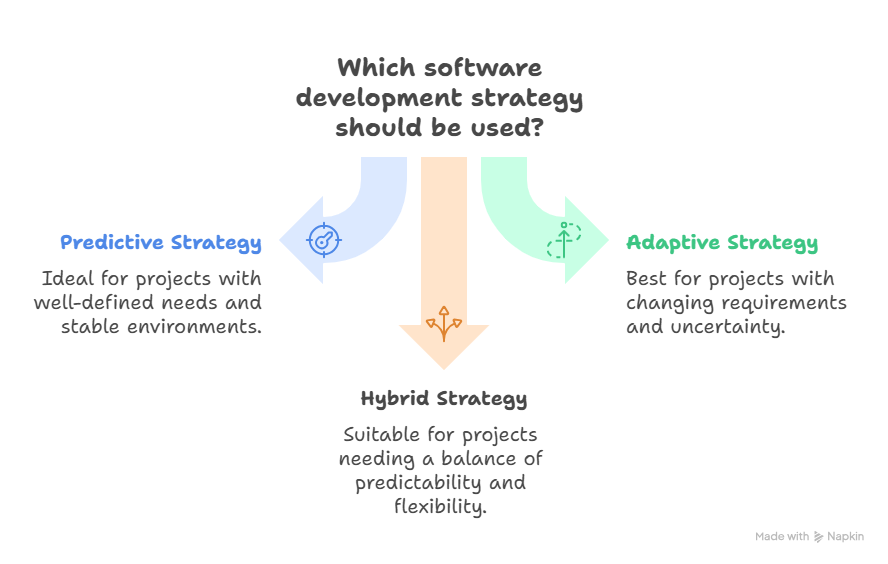
Predictive, Adaptive, and Hybrid approaches are the three primary software development strategies.
- In Predictive strategy, / Plan Driven
a precise plan is created and adhered to throughout the duration of the project. The timetable, budget, and deliverables are all specified and determined from the beginning of the project. This method is ideal for projects with well-defined needs and stable environments.
- The Adaptive strategy, / Change based
often known as Agile, places emphasis on adaptability and flexibility. On the basis of feedback from stakeholders and changes in the development environment, requirements and project plans are continuously revised and reevaluated. This strategy is ideal for projects with quickly changing requirements and a high level of uncertainty. - The hybrid technique, / Change based
as its name implies, contains features of both the predictive and adaptive approaches. It entails drafting a high-level strategy at the beginning of the project while allowing for flexibility and modification as the project develops. This strategy is ideal for projects requiring a balance of predictability and flexibility.
Each strategy has its own benefits and drawbacks, and the approach chosen will rely on the project’s particular requirements.
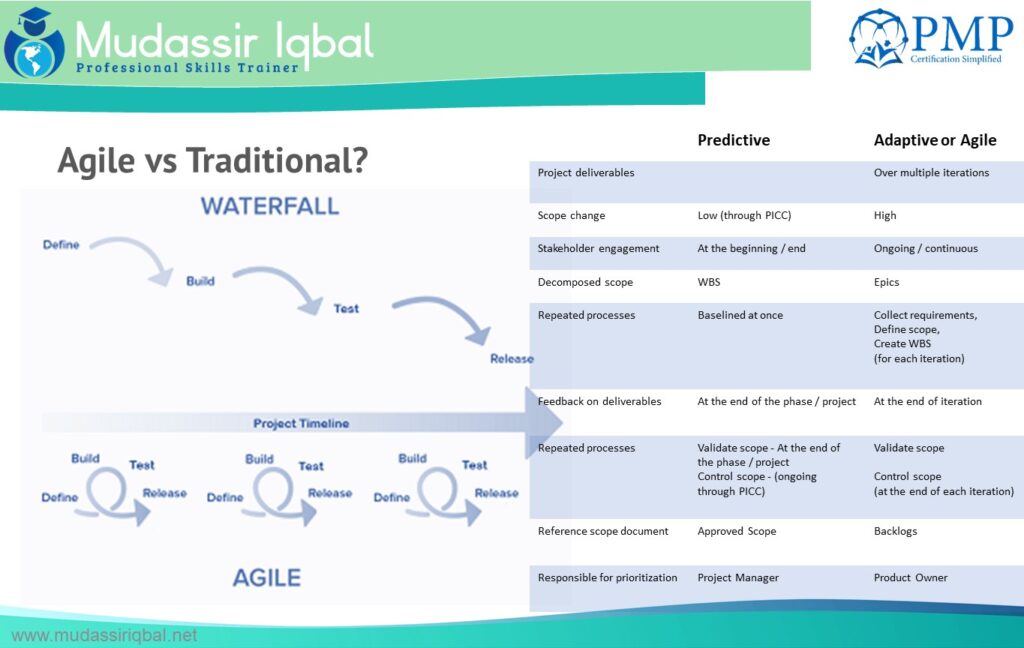
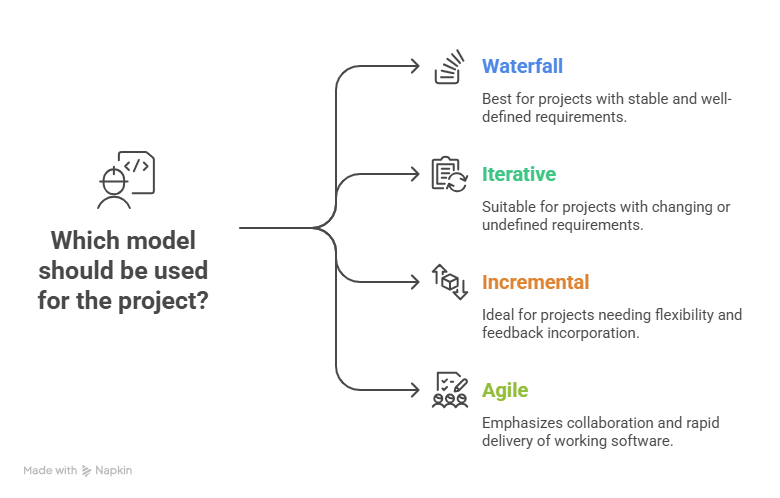
Waterfall, Iterative, Incremental and Agile
- Waterfall:
The Waterfall model is a sequential and linear approach to software development. It follows a defined set of stages, where each stage must be completed before moving on to the next. The Waterfall model is best suited for projects with well-defined and stable requirements. - Iterative:
The Iterative model involves repeating a cycle of planning, development, testing, and review. The project is divided into smaller, manageable chunks, with each iteration building on the previous one. This model is best suited for projects where requirements are not well-defined and are likely to change.
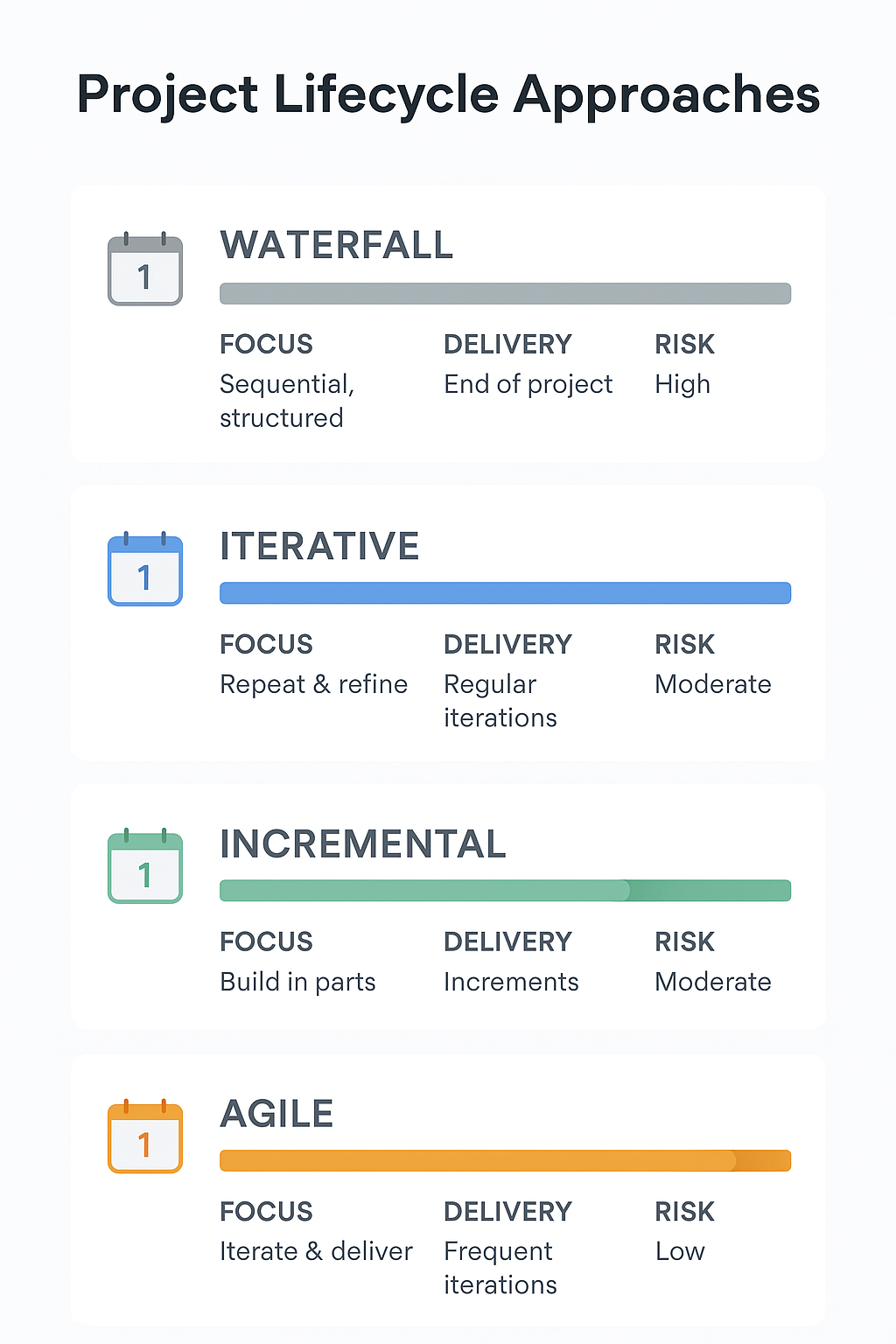
- Incremental:
The Incremental model involves breaking the project down into smaller parts, with each part being delivered and tested incrementally. This approach allows for changes to be made and feedback to be incorporated throughout the development process. - Agile:
Agile is a flexible, adaptive approach to software development that emphasizes collaboration, customer involvement, and rapid delivery of working software. Agile teams work in short sprints, delivering incremental releases of the software and regularly incorporating feedback from stakeholders.
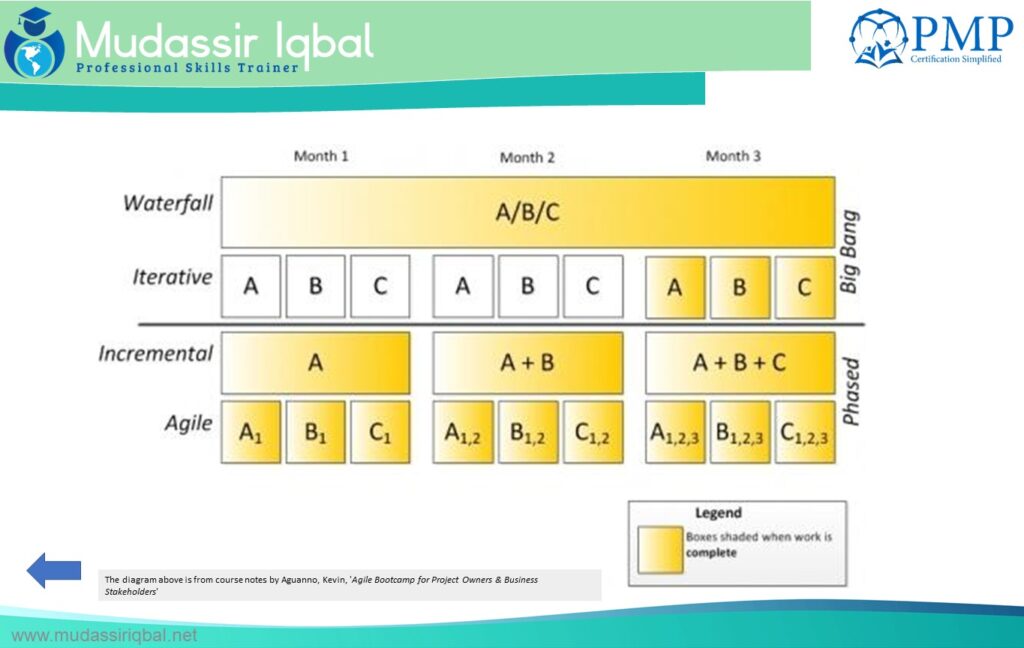
🧩 Explanation of the Diagram
The chart compares four delivery approaches — Waterfall, Iterative, Incremental, and Agile — across three months.
Each method is handling three components: A, B, and C.
The yellow shading in boxes means “work completed.”
1️⃣ Waterfall
- Work is done in sequence — one big block.
- All components A, B, and C are planned, developed, and delivered at the end of Month 3.
- Nothing is delivered earlier.
- This is also called the Big Bang approach — everything comes together at the end.
- Example: You only see the final software or product after 3 months.
🟨 Pros: Structured, predictable.
🟥 Cons: No feedback until the end, high risk if something goes wrong.
2️⃣ Iterative
- Each month, you repeat the same work (A, B, C), but refine and improve it.
- Focus is on building, testing, and enhancing the same features repeatedly.
- Deliverables evolve through multiple iterations.
🟨 Pros: Early feedback and gradual improvement.
🟥 Cons: Can take longer if scope not well managed.
3️⃣ Incremental
- You build the system in parts (increments).
- Month 1 → deliver A, Month 2 → A + B, Month 3 → A + B + C.
- Each increment adds functionality and value.
- You deliver working software early, and it grows over time.
🟨 Pros: Quick wins, usable product after each increment.
🟥 Cons: Architecture and design must allow addition of features easily.
4️⃣ Agile
- Combines both iterative and incremental ideas.
- Work is divided into small pieces (A₁, A₂, B₁, B₂, etc.) delivered in short cycles or sprints.
- Each sprint delivers a working part of multiple features — continuously tested and improved.
- Continuous feedback and value delivery.
🟨 Pros: Fast feedback, flexible, customer-focused.
🟥 Cons: Needs discipline, skilled team, and strong collaboration.
When to use waterfall, when agile?
The choice between using a Waterfall or Agile approach to software development will depend on the specific needs and constraints of the project.
The waterfall is best suited for projects with well-defined and stable requirements, where the scope of the project is clear and unlikely to change. This approach is often used in projects with a fixed budget and timeline, such as construction projects or hardware development.
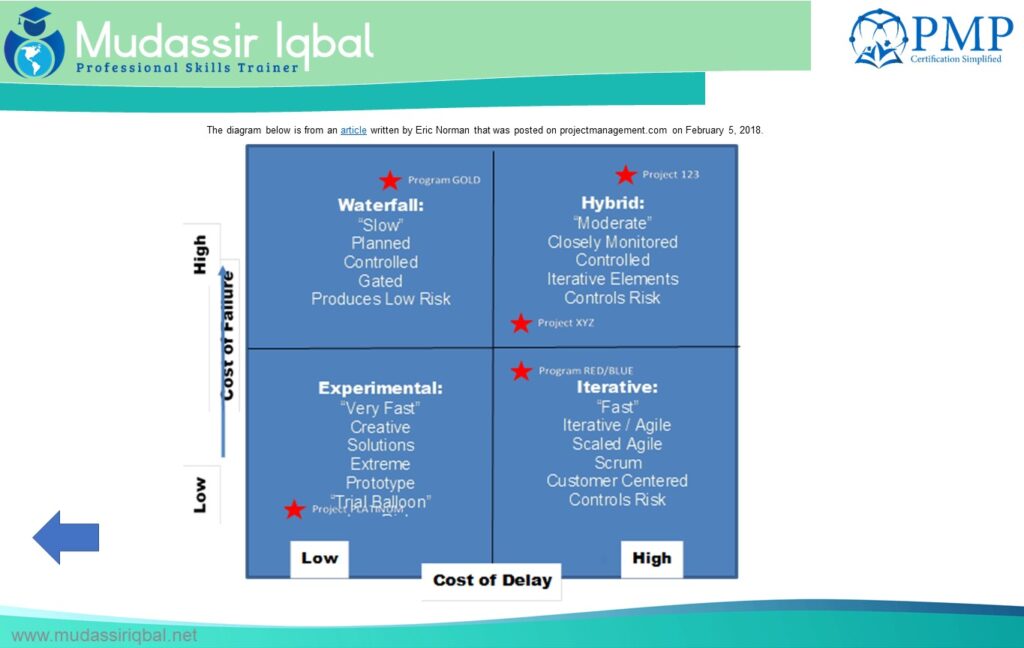
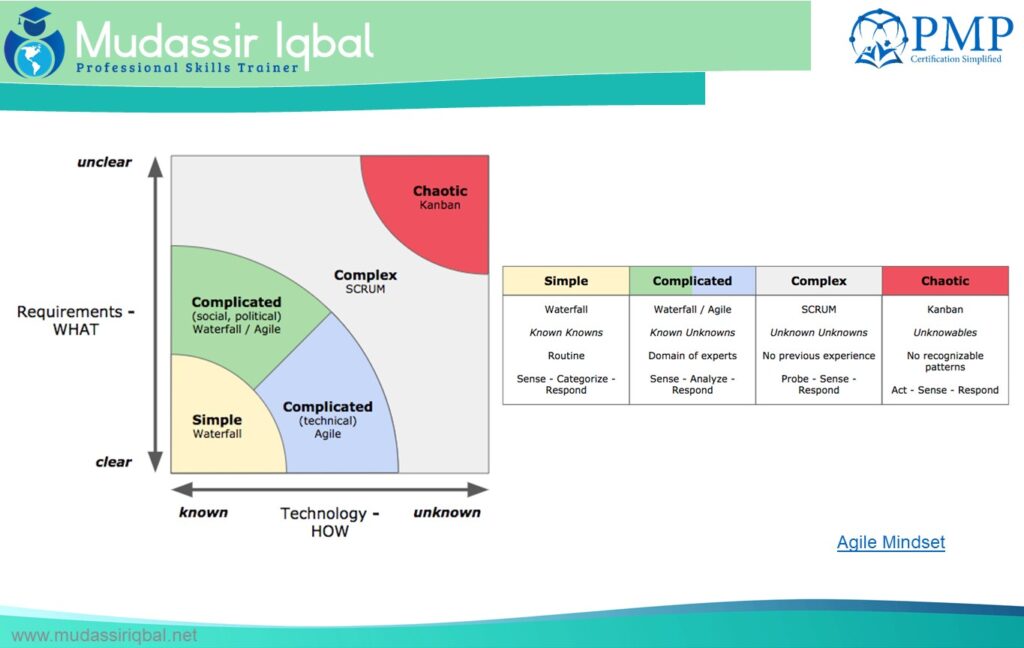
On the other hand, Agile is best suited for projects with rapidly changing or poorly defined requirements, where customer involvement and rapid delivery of working software are a priority. Agile is often used in software development projects where the final product is uncertain, and the development team needs to quickly adapt to changes in requirements or technology.
The focus of different approaches; Predictive, Adaptive and Hybrid Approaches
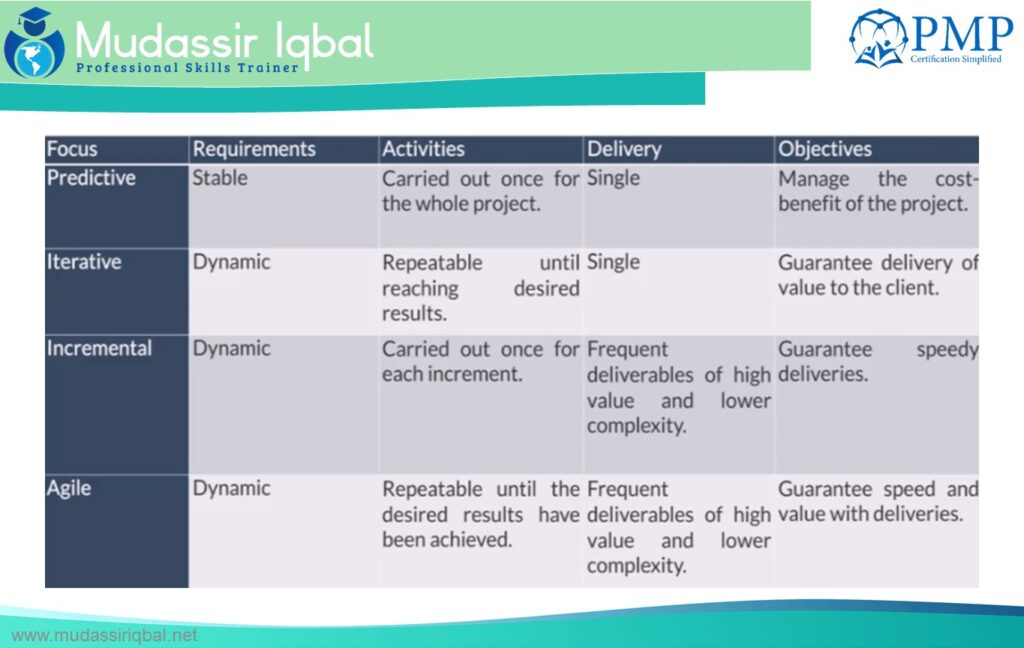
Predictive: It lowers the unpredictability and complexity of a project, enabling teams to operate in a disciplined and organised manner on the various phases of the project.
Iterative: It collects continuous input on the product as it is given, hence enhancing the value of the deliverables.
Incremental: It provides deliverables that can be utilised immediately by clients.
Agile inherits the benefits of iterative and incremental approaches.
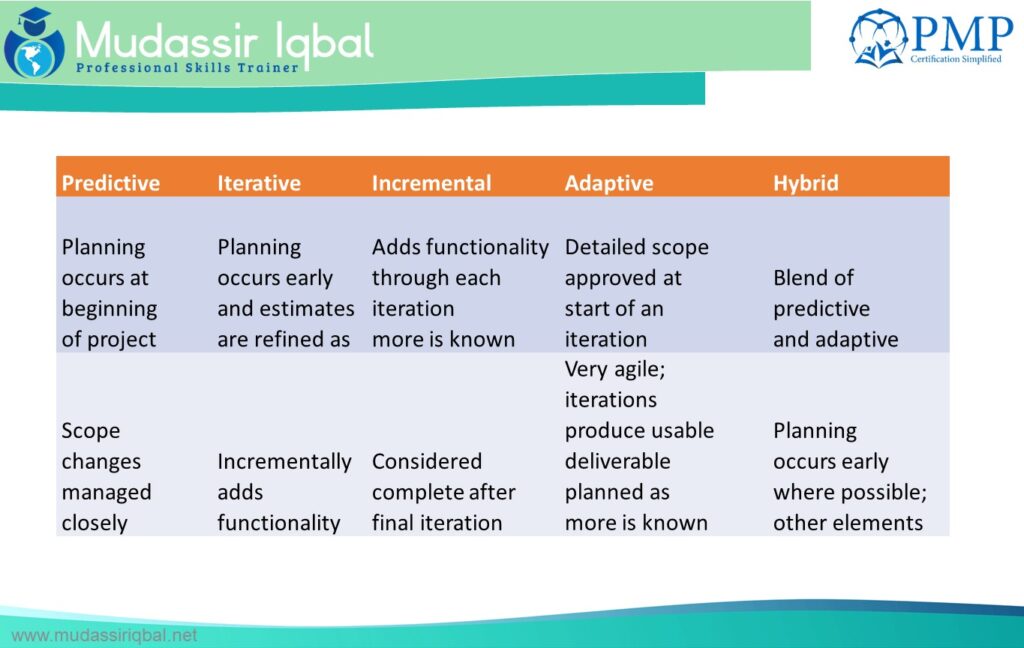
There is no one-size-fits-all approach ; Predictive, Adaptive and Hybrid Approaches
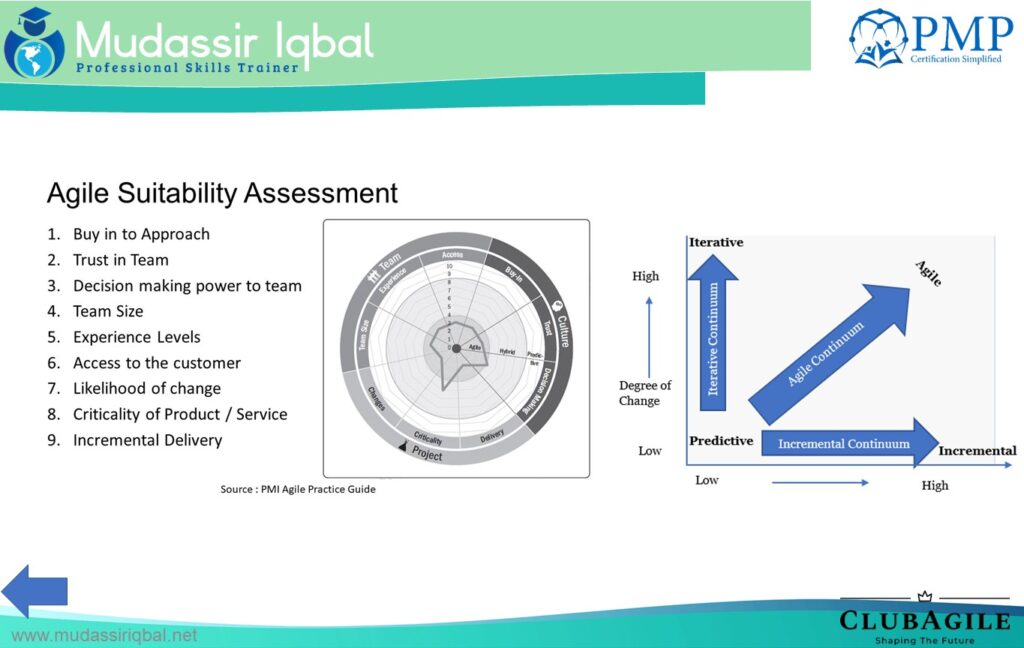
The choice of development strategy will be influenced by numerous variables, including:
- Size and complexity of the project: Larger and more complicated projects may demand a more structured and predictable strategy, such as the Waterfall model, while smaller projects may benefit from a more flexible and adaptable approach, such as Agile.
- If the project’s needs are well-defined and unlikely to change, the Waterfall approach may be the most suitable option. An Agile methodology may be better suitable if the requirements are unstable or poorly specified.
- If stakeholder involvement is a top goal, the Agile methodology, with its emphasis on collaboration and customer participation, may be the ideal option. If stakeholders are less involved in the project or have less influence over it, a Waterfall approach may be more appropriate.
- If the project has a predetermined timetable and budget, the Waterfall model may be the ideal option because it gives a systematic and predictable method. If the timetable and budget are less restrictive, an Agile methodology may be preferable.
- If the project entails high risks or unpredictability, the Agile methodology, with its flexibility to react fast to change, may be the best option. If the project is low risk and the needs are well-defined, the Waterfall methodology may be more suitable.
Ultimately, the choice of development approach will depend on the project’s specific requirements and constraints, as well as the preferences and expertise of the development team. A hybrid strategy that includes features of numerous strategies could potentially be viable.
Key Roles
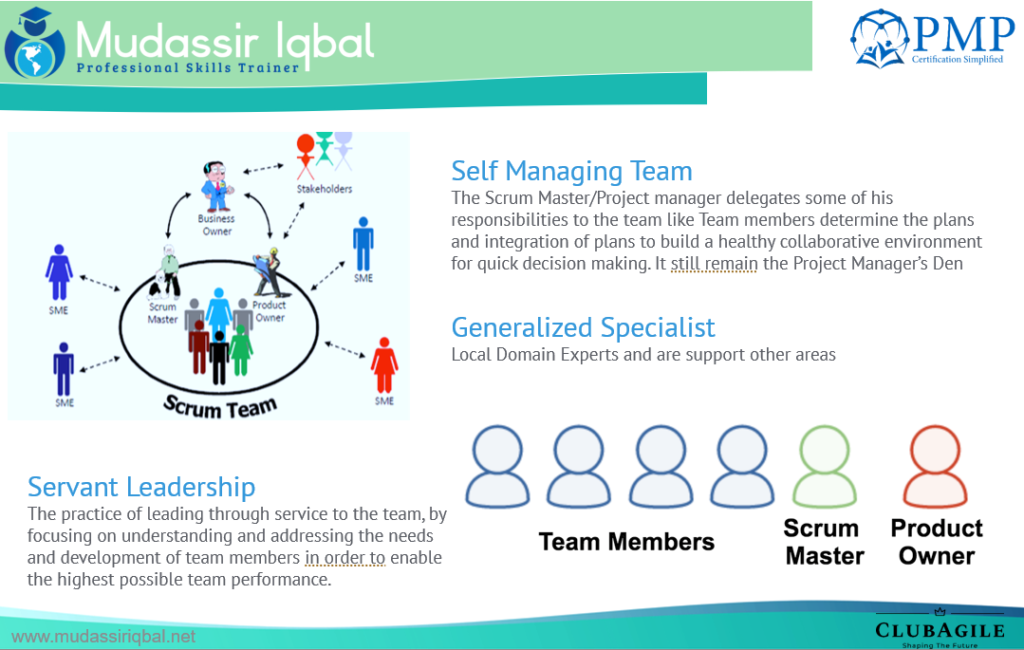
Plan based
- Project Sponsor: The individual or group funding the project.
- Project Manager: The leader responsible for planning and executing the project.
- Project Team: The group of individuals working together to achieve project goals.
- Business Analyst: The professional who analyzes business needs and requirements.
Change Driven
- Product Owner: Product owners manage the product roadmap and prioritize the backlog.
- Scrum Manager/Agile Project Team: Scrum masters facilitate scrums – the Agile framework that focuses on time-boxed iterations called sprints. Scrum masters act as coaches to the rest of the team
- Agile Coach: An Agile coach or mentor is a highly experienced professional who has implemented and executed agile projects.
- Development Team: An Agile team consists of more than one developer, but these are the next essential roles after the product owner
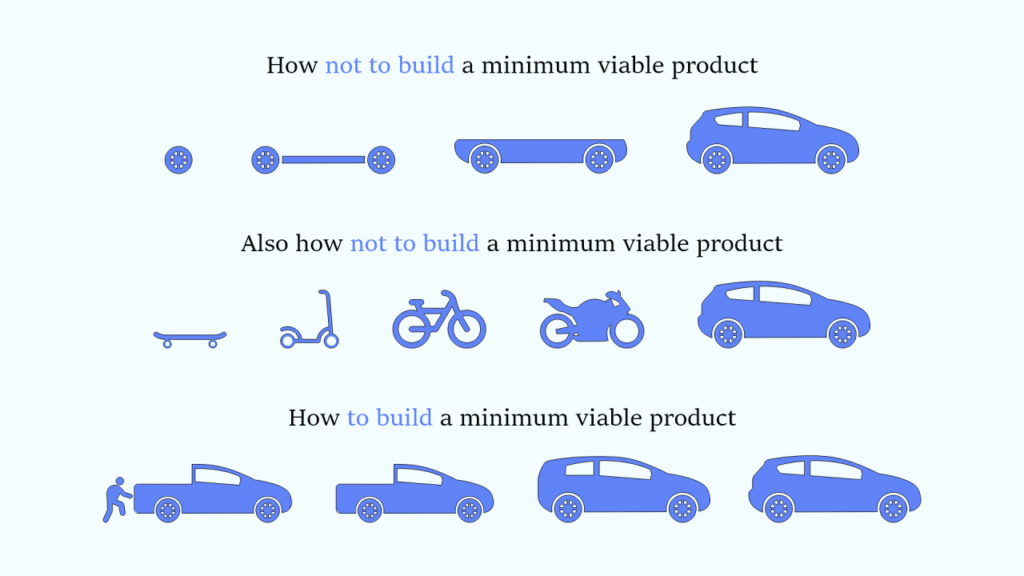
Visualise a correct Agile Project Management
The first approach is Waterfall
Second is definitely not an AGILE
Third is
References
https://www.agile-minds.com/when-to-use-waterfall-when-agile/
🔍 Top PMP Keywords for 2025
These popular search terms are commonly used by professionals preparing for the PMP exam. Use them to guide your study or content strategy:
- ✅ Certification as a Project Management Professional
- ✅ PMP Certification Project Management Professional
- ✅ Project Management Professional Exam
- ✅ PMP Exam Prep Guide
- ✅ PMP Study Plan
- ✅ PMP Certification Cost
- ✅ PMP Test Tips
- ✅ Project Management Course
Tip: These keywords can help improve your understanding of key exam topics and align your prep with current industry search trends.
|
📚 Flash Cards/ PMP Practice Exam (Identify and fill your knowledge gaps) |
🧮 Formula Sheet |
🔄 Project Management Flows Understand the Big Picture |
📝 PMIs PMP Application |
|
🎲 Process Groups Game (First step into your ITTO Journey) |
⚡ Agile Project Management Flows | ||
|
🏅 Earn Your PDUs (Renew your Certification) |
📌 PMP Exam Content Outline Game (Begin your Journey here) |
📚 And More |
|